World
Strengthening Security in the Jordan Valley
Strengthening
Security in the Jordan Valley: Volunteers, Drones and Cooperation to Protect
the Border and Support Emergency Rescue Operations
Against the backdrop of
threats in the north and along Israel’s eastern border, a new initiative is
strengthening security and emergency response capabilities in the Jordan Valley
through volunteer training, advanced equipment and drones that can be used both
to detect infiltrations and smuggling attempts and for search-and-rescue
operations in the event of a natural disaster.
After approximately
1,050 consecutive days of service and deployment as part of Israel’s security
efforts, Chaim Malespin, who in recent years has worked to strengthen
ties between Israel and its supporters around the world, concluded that the
threat facing Israel is not limited to the borders with Gaza and Lebanon.
According to Malespin, the Jordan Valley is also an area of critical strategic
and security importance and requires significant reinforcement of its local
security and emergency-response capabilities.
A further step in this
direction has now been taken, as a joint initiative involving Sky Next, the
Jordan Valley Regional Council, security and rescue authorities, and local
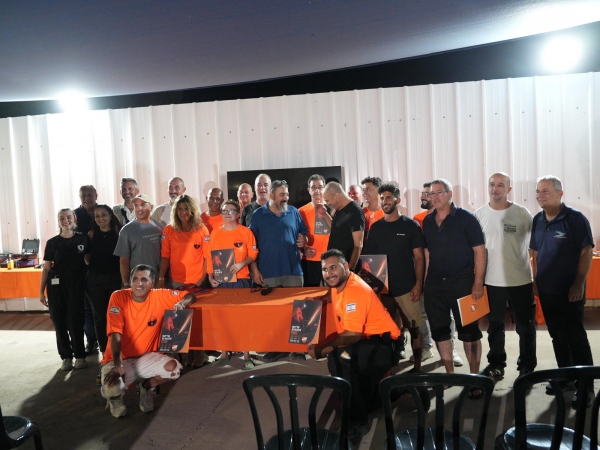
volunteers has led to specialized training for 14 volunteers and technical
personnel in drone operations, as well as the provision of equipment to
volunteers operating in the area.
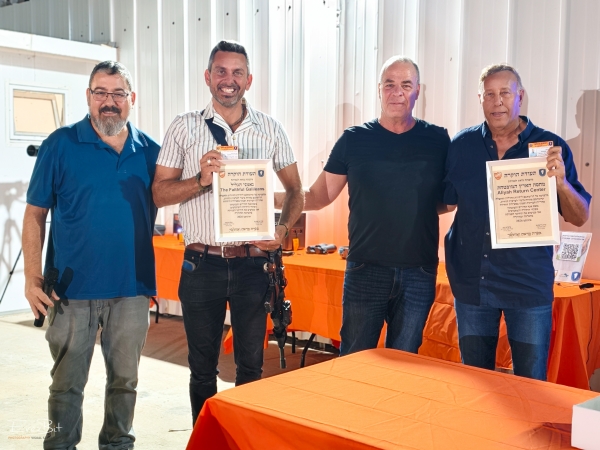
Chaim Malespin, who heads two organizations active in Israel and internationally — Aliyah Return Center and Faithful Galileans — says that in recent years there has been an increasing need to support security systems in communities located near the Jordanian border. According to him, since 2024 he has become increasingly convinced that the activity should be expanded and that volunteers should be provided with
additional technological and professional
tools.
One of the reasons for
this is the evolving threat posed by drones. Along the Jordanian border, drones
have been used for smuggling drugs and weapons, while there have also been
incidents involving suspects attempting to cross the border, damage fences or
exploit breaches in the security barrier.
“Drones are not just
cameras in the sky. They can help locate infiltrators, scan areas that are
difficult to access, search for missing people, and assist in search-and-rescue
operations. The ability to deal with hostile drones carrying weapons or explosives
will also become increasingly important,” Malespin says.
At the same time, this
technology has clear civilian applications. The Jordan Valley is located in an
area vulnerable to earthquakes, and advance preparedness for such an event
could prove critical. In the event of a major earthquake, drones equipped with
observation systems could help identify damaged areas and search for people
trapped under rubble, at a time when every minute could be critical for rescue
teams.
To advance the
initiative, the organizers joined forces with Albert Kobi, Director of
Emergency and Security Services in the Jordan Valley, Regional Council Chairman
Idan Greenbaum, and local volunteers. As part of the initiative,
volunteers underwent specialized training in drone operation and received
equipment that will enable them to participate more effectively in security,
search and rescue missions in the region.
Malespin emphasizes
that the initiative is based on a broader concept: not merely purchasing
equipment, but creating cooperation between different organizations. “The
principle is simple,” he says. “We are stronger when we work together, rather
than when each organization operates on its own.”
The Aliyah Return
Center led by Malespin, assists new immigrants and
supports their integration into Israeli society, including through assistance
with food, clothing, furniture, housing, Hebrew studies and professional training.
At the same time, Faithful
Galileans, based at Beit Zera, works to train supporters and “ambassadors”
of Israel from around the world through education, volunteer activities and
hands-on experiences in Israel.
For Malespin, the
connection between social and international activity and the security and
emergency needs on the ground is part of a broader concept of mutual
responsibility.
“What encourages me
most is the fact that so many of the people doing this work are volunteers who
are not waiting for someone else to solve the problem. They give their time,
learn professional skills and prepare themselves to protect and rescue their neighbors,”
Malespin says.
The current activity is
the first stage of a broader program whose goals include strengthening
search-and-rescue capabilities, developing programs involving service and
rescue dogs, expanding emergency equipment supplies, and potentially assisting
in the future with making an ambulance available to the volunteer
emergency-response network in the area.
For Malespin, the
delivery of equipment and completion of the volunteers’ training represent far
more than a one-time event. “Every drone, every trained volunteer, every rescue
tool and every partnership makes the Jordan Valley a little stronger,” he concludes.
“That’s what I love
about the north. It is a place where people come together, roll up their
sleeves and take responsibility for one another. It is a place with heart.”
Stories for you more +